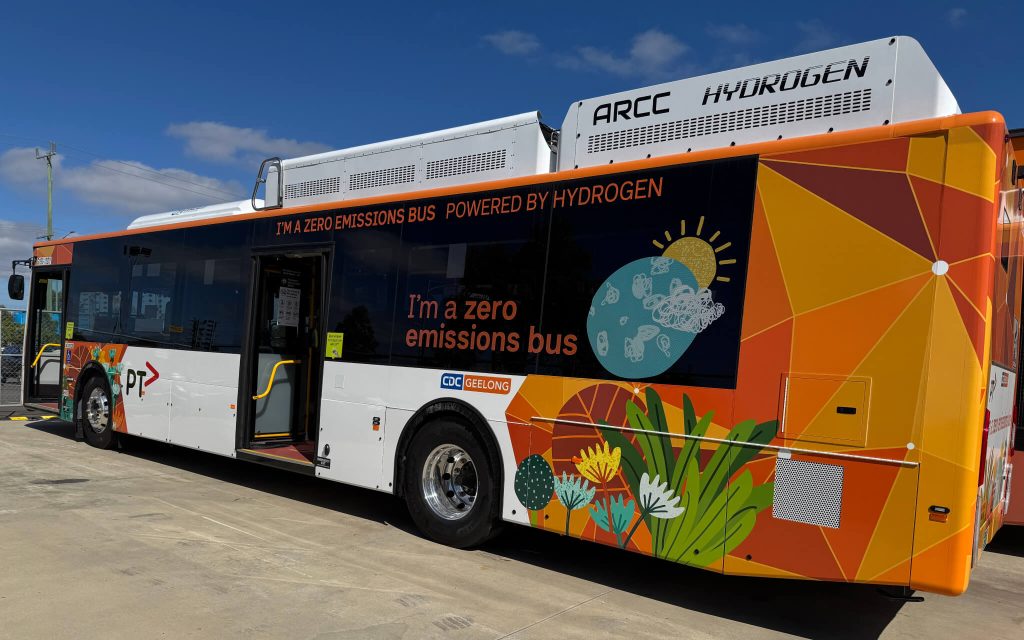
 MELBOURNE: ComfortDelGro Corporation Australia (CDC), through its subsidiary CDC Victoria, today began the operation of two hydrogen powered fuel cell electric buses in Geelong, Victoria, demonstrating its commitment to greener journeys and a more sustainable, environmentally-friendly future in transportation.
The two buses will operate predominately on two routes in the city of Geelong and will be refuelled at the recently launched VIVA Energy Hub, Australia’s first publicly accessible hydrogen refuelling station. CDC is one of the foundation partners of this multi-million dollar hydrogen mobility project led by VIVA Energy and joins other partners of VIVA who will refuel heavy vehicles at the station.
The adoption of hydrogen technology continues CDC’s vision of harnessing innovative technology to enable greener journeys that began with the introduction of hybrid and electric buses to its fleet. In addition to the environmental benefits of these buses, customers can expect a smoother, quieter, and more comfortable ride.
CDC’s sister company, Metroline, part of leading multi-modal transport operator ComfortDelGro, has been operating hydrogen powered buses in the United Kingdom since 2021.
The buses will operate on high patronage routes including Route 1 – North Shore Station – Deakin University via Geelong City and Route 22 – Geelong Station – North Shore Station via Anakie Rd.
ComfortDelGro Australia CEO Nicholas Yap said:
“The introduction of two zero emission buses to these busy routes in Geelong is a significant step forward in our sustainability journey as we transition to a zero-emission fleet. These innovative buses, designed and manufactured by Australia-based manufacturer ARCC, use aluminium in the chassis to deliver one of the lightest zero emission buses in the world, making them some of the most efficient, drivable and comfortable vehicles on the road. Our partnerships with like-minded, forward-thinking organisations like VIVA Energy and ARCC underscore and strengthen our commitment to reduce emissions and align with our vision of mobility for a better future.”
Achieving zero emissions across Victoria’s bus fleet is critical to meeting the State’s legislated commitment to zero net emissions, and the Victorian Department of Transport is working with bus operators, including CDC, towards this transition.
CDC Victoria CEO Jeff Wilson said:
“This is a continuation of our journey towards cleaner modes of transport for Victoria and is a win for both our passengers and the environment. Our passengers on these routes will enjoy a smoother, quieter and more comfortable ride in these modern, environmentally friendly buses. We’re proud to add two zero emissions buses to our fleet of eight electric buses and 50 hybrid buses already in operation.”
This announcement follows another milestone for sustainable transport in Victoria with CDC Victoria’s commencement of operations under the Metropolitan Zero Emission Bus (ZEB) contracts. Over the contract period, CDC Victoria will transition its Metropolitan fleet to full zero emissions by 2034.
Fast facts:
- The two buses that will operate on routes in Geelong are ARCC Viking hydrogen fuel cell electric vehicles.
- Passengers will enjoy a quieter, smoother, and more energy-efficient journey on these buses.
- Electric buses are much quieter than diesel buses, reducing noise pollution.
- The buses have a capacity of 32kg of onboard hydrogen storage – capable of >450km between refuels.
- VIVA’s hydrogen refuelling station project received a $34 million grant from the Australian Renewable Energy Agency (ARENA) as part of ARENA’s Advancing Renewables Program. The Victorian Government also contributed $1 million to the project via the Renewable Hydrogen Commercialisation Pathways Fund.